Cereal Murder and Other Crime
My Mexican Mazapán Moment
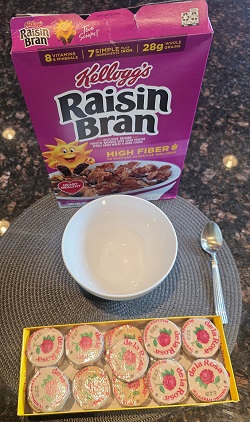
It all ended with a trip to Mexico and a misconception—my first noted zeugma of 2026. When one leaves a country by air, a certain finality is achieved by disposing of the local currency. Mexico has currency called the peso, which means weight in Spanish, which I discovered when I was doing research for this blogitem. Just as the British use the pound, the Mexicans use pesos. The aeropuerto in Puerto Vallarta in Mexico's Jalisco State* has a long corridor devoted to repatriating what would otherwise be errant pesos. These pesos can be exchanged for productos de México, and the corridor has many stores purveying such. Needing neither handbags, T-shirts (pre-obtained on the Malecón), nor alcoholic beverages, I selected a purveyor of sweets and purchased a large box of marzipan at what seemed to be an excellent price.
What a Difference an R Makes
Lacking both Spanish and Google at the airport—and feeling the need for neither—I assumed that the large, inviting yellow box labeled de la Rosa Mazapán was indeed marzipan. Silly wabbit! It has nothing to do with almonds, but is rather
"...a popular, crumbly Mexican candy made from ground peanuts, powdered sugar, and sometimes artificial flavors. Most famously produced by the de la Rosa brand, it is a disc-shaped, peanut-based twist on traditional almond marzipan created in Guadalajara in 1950. It is known for its intense sweetness and fragile texture that melts in the mouth."
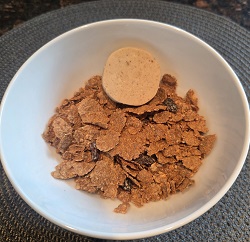
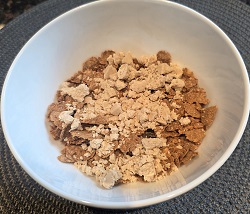
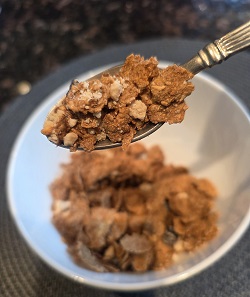
According to Google. And, I might add, it's inexpensive, also readily available from Amazon, and not only yummy but makes a fine subject for this blogitem! Not bad for a missing R, eh? And especially not-bad for this sweet-craving blogger. Although I enjoyed consuming these discs in their nascent state, I made an even more valuable mental connection: Sugar+Crumbly+Cereal. I now offer my latest invention, shades of How to Bananafy The Bun, to you, my thousands of millireaders.
How to Mazapán the Raisin Bran
The Immigration Mess
Noooooo! Not politics!
Yes, not politics. I blame neither party, but rather myself. I have a startlingly simple solution to the issue, but since nobody bothers to ask me personally and most likely never will, immigration continues to confound the polity**. Ennutshellized, millions of people want to immigrate to the United states for various reason, and there are many different ideas about how to deal with it. One example is the system of visas that the government issues in profusion. This is a story about one of those visas.
Despite the modern-day equivalent of reading the paper, I had never heard of the U-Visa until today. You probably haven't, either.
What is the U-Visa?
Ask a simple question and Google will give you a pageant. Greatly oversimplified, it's federal permission to stay in the United States "for victims of specific crimes who suffered abuse and assisted law enforcement." What could go wrong? We heard from USDUC on this***! Where there's a government program, fraudsters aren't far behind.
- Find a friendly police officer.
- Report a serious crime. (Armed robbery was the example used in the article I read.)
- Bribe the police to submit a Form I-918 (Supplement B) and potentially Form I-912. The going rate seems to be $5000.
- Stay in the United States legally for years, possibly many years, possibly with your family.
I think there are a minimum of two crimes implied above, but arguably no victims. Disclaimer: Please don't follow my instructions as written; Google has additional details.
Speaking of Fraud, How's Michael Smith doing?
Michael Smith is the guy who made millions by using AI to create songs and then used PCs to "listen" to the songs and earn him a stream of royalties. He got caught, and according to this blogitem and its update, eventually pleaded guilty to one count of wire fraud. As I mention in the update, I'm disappointed that he didn't opt for a jury trial, but I decided to leave that decision up to him.